Chernor Bah Apologises for Sierra Leone’s Fuel Shortages and Promises Prices Will Hold
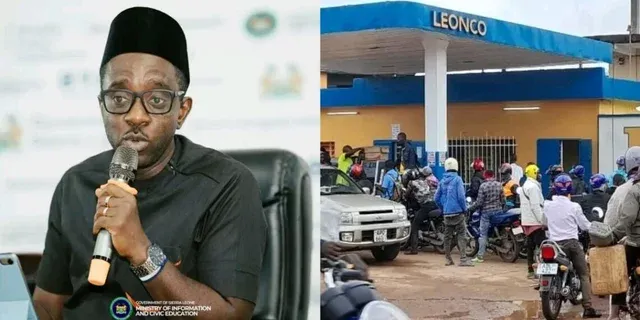
Sierra Leone’s Information Minister Chernor Bah has apologised to the public over fuel shortages and the long queues they caused, while assuring motorists that regulated pump prices will not rise before the end of 2026.
Bah delivered the apology on Tuesday, November 24, as he closed the Ministry of Information and Civic Education’s weekly press briefing at the Miatta Civic Centre in Freetown. He said the government was sorry for the hardship people had faced over the previous week as they tried to find fuel.
According to Bah, importers had difficulty obtaining the US dollars needed to pay overseas suppliers. The government is working with commercial banks to provide letters of credit starting at US$5 million for each major importer, he said. An initial US$1 million had been made available immediately, and new fuel shipments were arriving, helping to reduce queues at some stations.
“Let me make it clear: the government has no plans, at least until the end of this year, to allow fuel prices to go up,” Bah said. He added that prices could fall in 2027 if global oil prices continue to decline, while further deliveries are expected to ease shortages in the coming days.
The regulated prices remain NLe40 per litre for petrol and NLe45 for diesel, rates set by the National Petroleum Regulatory Authority and effective since October 28, 2026. The article reports that queues have formed in Freetown, Bo, Kenema and Makeni, with some stations running out or limiting sales. In some locations, motorists reportedly turned to the black market, where petrol reached as much as NLe80 per litre. Higher fuel costs also contributed to increased transport fares in several towns.
The report attributes the supply problems largely to limited access to foreign currency: fuel is bought in dollars and sold locally in Leones. The government has also indicated it will enforce a Finance Act requirement for exporters to repatriate at least 30 per cent of foreign-currency earnings through local commercial banks. The regulator, meanwhile, says it will monitor stocks, distribution and retail sales to address hoarding, artificial shortages and unauthorised price increases.
Source ↗