Douglas Bosire warns HIV treatment costs could strain Kenya as donor support declines
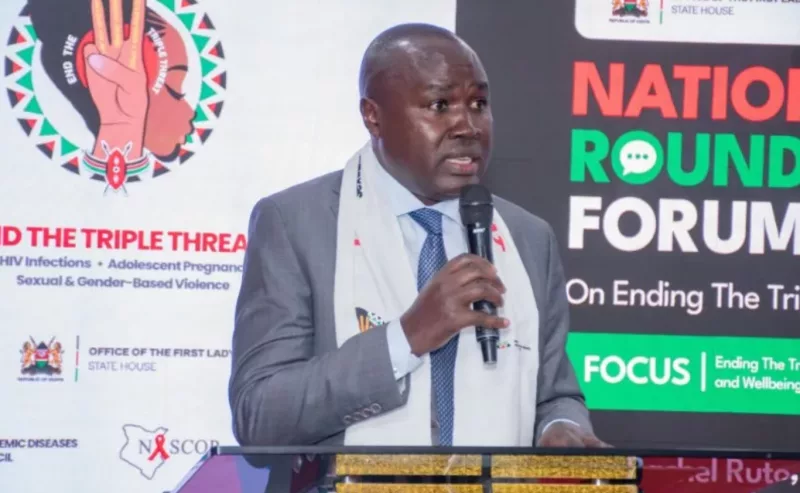
Kenya spends as much as Sh25 billion each year to provide HIV treatment, and National Syndemic Diseases Control Council chief executive Douglas Bosire says preventing new infections is vital as the country faces a growing funding challenge.
According to the report, foreign donors currently cover about 66 per cent of Kenya’s HIV programme, while the government and other domestic sources fund the remaining 34 per cent. The United States provides most of the external support and expects Kenya to assume the full cost of its HIV programme by 2030.
Bosire said preventing infections among children could ease the long-term financial burden, since those who acquire HIV need treatment throughout their lives. Kenya recorded 3,396 new infections among children under 15 in 2025. He said 72 per cent were linked to mothers who began antenatal care late or did not consistently take HIV medication during pregnancy and breastfeeding.
He urged men to help pregnant partners attend health facilities, including by contributing to transport costs. Bosire said attending the recommended four antenatal visits offers benefits beyond HIV care. He made the remarks in Nairobi at the launch of activities for World AIDS Day 2026, which will be observed on December 1.
The report says Kenya has about 1.4 million people living with HIV, including 69,330 children. Nearly half of children receiving treatment have not achieved viral suppression, Bosire said, meaning the virus has not been reduced to undetectable levels in their bodies.
New infections fell from 32,027 in 2021 to 13,936 in 2025, a 56.5 per cent decline. But Bosire cautioned against treating that progress as success: the latest figure still amounts to roughly 38 new infections a day, while 19,434 people died of HIV-related causes last year. Adolescents and young adults aged 15 to 24 accounted for 4,322 of the new infections.
Chanzo ↗