He Ting Ru Says Proposed S$50,000 Haze Fine Is ‘Little More Than a Tap on the Wrist’
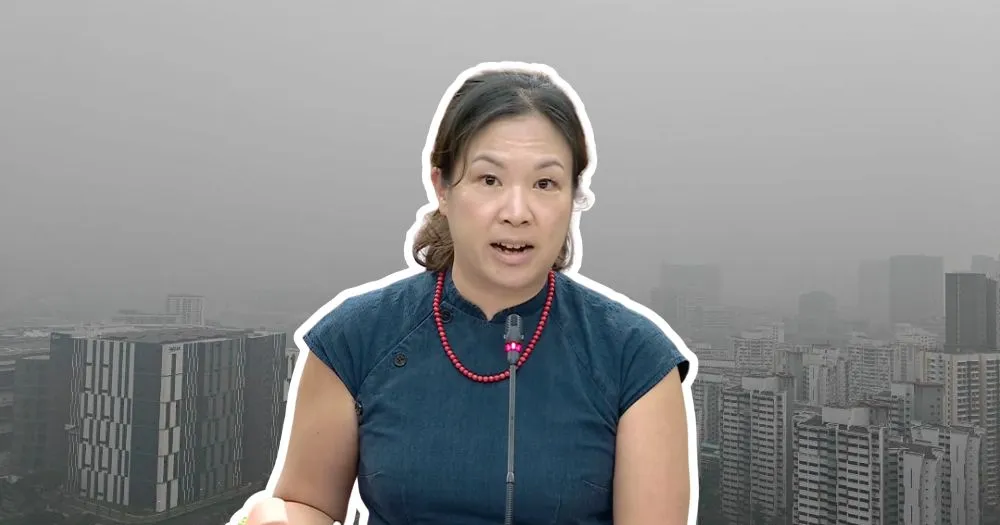
Workers’ Party MP He Ting Ru has questioned whether a proposed S$50,000 penalty would be enough to hold individuals accountable for failing to provide information about companies linked to transboundary haze.
Speaking in Parliament on Nov. 4, He described the one-off fine as “little more than a tap on the wrist”. He argued that the penalty may not send a strong enough warning to senior decision-makers and suggested raising it to S$200,000 when someone intentionally suppresses information.
The debate followed the introduction of the Transboundary Haze Pollution (Amendment) Bill by Sustainability and the Environment Minister Grace Fu. He contrasted the proposed individual penalty with much larger daily fines that could apply to companies: up to S$1 million for each day of haze pollution and up to S$500,000 for each day of failing to comply with a preventive measures notice.
He also questioned whether the individual fine would have a meaningful impact on executives with high incomes. Referring to annual reports from several companies associated with haze-causing fires, he said some executives earned well over S$1 million a year.
Beyond penalties, He raised concerns about the ability to identify those responsible. He said lawmakers had heard about difficulties obtaining reliable data, and cautioned that changing the law without improving information-gathering capabilities could make enforcement harder.
He called for stronger regional cooperation and suggested Singapore use its 2027 Asean chairmanship to advance information sharing. He also pointed to questions over whether the Asean Coordinating Centre for Transboundary Haze Pollution Control, recently established in Indonesia, has sufficient authority to fulfil its role.
In her closing speech, Fu addressed the wider regional response and the challenges posed by haze. He called for a two-way approach, noting that environmental harm can occur at different stages of supply chains and far from where the resulting goods are ultimately consumed.
Source ↗