John Williams Says He Regrets Helping Barnaby Joyce Rise Through the Nationals
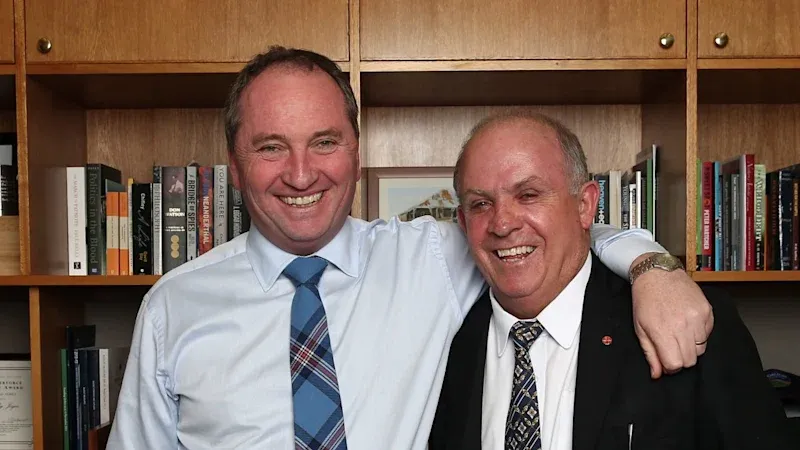
John Williams, a former Nationals senator who once helped Barnaby Joyce climb the party ranks, has publicly questioned the loyalty of his longtime political ally. In an interview ahead of the anniversary of Joyce’s departure from the Nationals, Williams said he regretted the support he had given him and accused him of misleading voters and party members.
Williams said he had spent 11 years working alongside Joyce and described their relationship as a close friendship. He recalled that Joyce’s final text to him contained four words: “You are a goose.” Williams said the exchange left him questioning how Joyce treated those who had stood by him through years of political controversy.
Among Williams’ claims was that Joyce had once privately offered to back the Snowy Hydro 2.0 project in a deal with then-prime minister Malcolm Turnbull, while seeking support for inland rail. Williams said he had urged Joyce to oppose the costly pumped-hydro scheme after arranging for energy expert Professor Simon Bartlett to brief Nationals politicians and staff about concerns over its engineering and finances. Williams recalled telling Joyce the scheme was a “lemon,” and said Joyce responded that he would make a deal with Turnbull.
Williams also disputed Joyce’s account that an entire Nationals branch in Tamworth had defected to One Nation. He said six members had switched parties and claimed local membership had since risen by 20 per cent. Williams, who helped establish three Nationals branches in New England and cast the deciding vote that made Joyce the party’s Senate leader in 2008, said he bitterly regretted contributing to Joyce’s rise.
Joyce’s departure has coincided with growing support for One Nation, according to the report, which says a recent Resolve Political Monitor placed Pauline Hanson’s party ahead of the Coalition in primary-vote support. Williams left Parliament in 2019 after being diagnosed with Parkinson’s disease. His accusations are his account of a fractured political friendship; the article does not include a response from Joyce.
Source ↗