Michael McWalter untangles the facts about liquefied natural gas
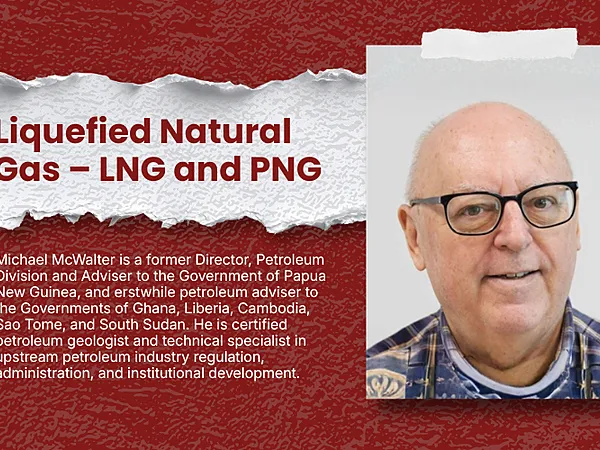
LNG is a familiar abbreviation in Papua New Guinea, but Michael McWalter says many people may not know precisely what it means or how the fuel is produced. In an explanatory article, the former petroleum director sets out the difference between natural gas and liquefied natural gas, and why the distinction matters.
McWalter explains that natural gas is drawn from underground rock formations through gas wells. It does not occur in the earth as LNG, he notes: the gas is gathered and then cooled until it becomes liquid. In its original state, natural gas can be burned for heat in homes, businesses and industry, and it can also serve as a raw material for products such as fertilisers and plastics.
The challenge, according to McWalter, is that gas fields are often far from the people and industries that need the fuel. Natural gas is relatively bulky to move, so it is commonly delivered through pipelines. Turning it into LNG makes it far more compact, allowing it to be transported over long distances aboard specially insulated tankers.
McWalter says liquefaction raises the gas’s density substantially. He gives a range of 430 to 460 kilograms per cubic metre for LNG, depending on its composition, and says its energy density is more than 600 times higher than that of natural gas in its ordinary gaseous state for a given mass. The change, he explains, allows considerable energy to be carried in a much smaller volume.
He also cautions readers against confusing LNG with LPG, or liquefied petroleum gas. The terms refer to different fuels, despite their similar abbreviations. McWalter’s article aims to make the basic science clearer for readers who encounter LNG in discussions about Papua New Guinea’s energy resources and supply.
Sursa ↗