Samuel Shue on Building Trust With Police Dog Jango—and Life Beyond the K-9 Unit
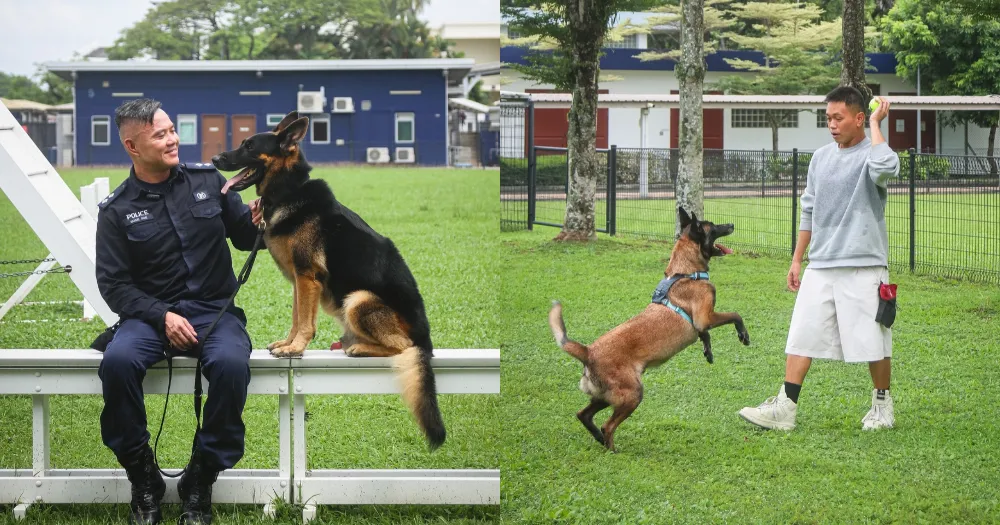
For Inspector Samuel Shue, working with a police dog is about far more than commands and training. The 47-year-old Singapore Police Force officer says a strong partnership takes time, patience and a careful understanding of each animal’s personality. He now works with Jango, a four-year-old German Shepherd trained for public order and security duties.
The pair have been together since 2024. Shue describes Jango as sociable and friendly, with a particular fondness for human company. Their temperaments are different: Shue calls himself indecisive, while Jango is focused whether he is on duty or playing. The handler told Mothership that police dogs have individual habits and needs, and that people must learn what makes each one tick.
That perspective grew from a difficult start. Shue, who has served in the force for 26 years and worked with several dogs, recalled that his first police dog had a troubled history and bit him several times during their early training. As a newcomer to handling dogs, he found the experience intimidating. With more time together, however, he learned to identify the dog’s triggers and adjust how he worked with it.
Shue said the experience left him with a lesson he has carried through his career: forming a bond with a dog can be a little like raising a child. The handler and animal have to learn each other’s behaviour, rather than relying on assumptions about what a police dog is like.
The story also follows Dodger, a seven-year-old retired Belgian Shepherd who has started a new chapter with local fashion designer Max Tan. Tan adopted the dog earlier this year, making him the second retired police K-9 he has taken in. Tan joked that Dodger does not seem to understand retirement, and recalled that on his first day at home the dog was welcoming to nearly everyone. Tan said Dodger may initially have thought he was the person who had taken him away from his former home.
While Jango remains on active duty, Dodger’s days now involve walks and time relaxing at home. Their contrasting routines offer a glimpse of the bonds handlers and adopters build with these working dogs after the uniformed role ends.
Source ↗