Tatjana Smith Was Racing in Rotterdam Before Announcing Her Dutch Switch
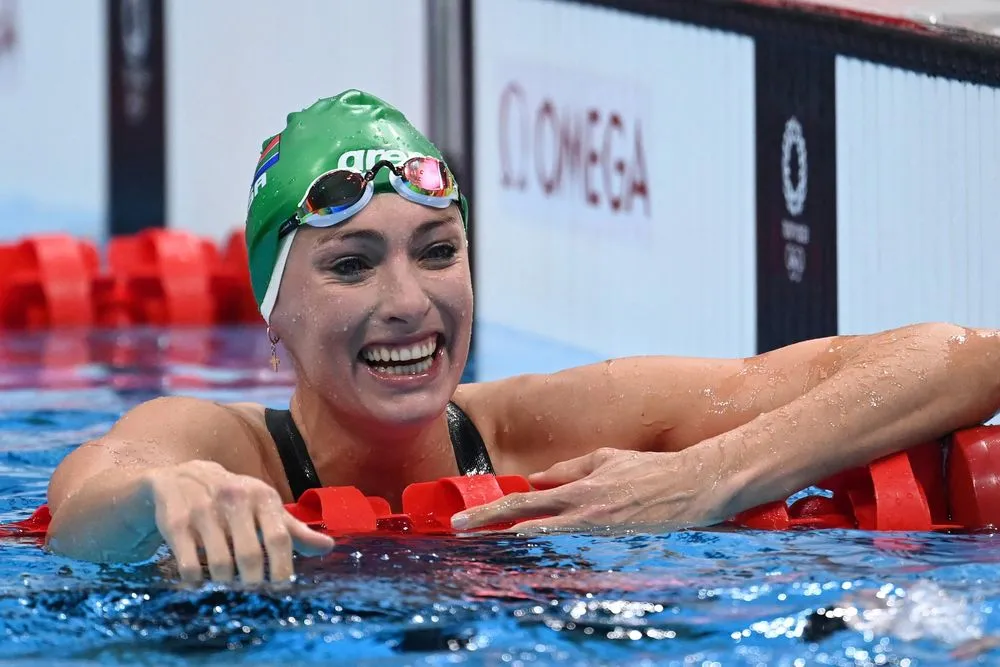
Tatjana Smith had already competed in the Netherlands before revealing that she would represent the country in the next chapter of her swimming career. The two-time Olympic champion entered a Dutch qualifying meet in Rotterdam late last month, before her change of allegiance was formally announced.
Because the transfer had not yet been finalised publicly, Smith competed under the name of local club Zwemvereniging Westland. She went on to set championship records in three breaststroke events: 29.54 seconds in the 50 metres, 1:03.92 in the 100 metres and 2:19.96 in the 200 metres. According to the report, each result was comfortably inside the qualifying standard for the World Aquatics Swimming Championships (25m) in Beijing.
World Aquatics has since approved the switch, clearing the 29-year-old to make her Dutch debut at the short-course championships, scheduled to run from December 1 to 6. The news has drawn attention in the Netherlands, where the federation and media have welcomed the arrival of one of the sport’s most decorated swimmers.
The report says the move is connected to Smith’s family background as well as her sporting future. Born Tatjana Schoenmaker, she has Dutch citizenship through her father, René Schoenmaker, who comes from Naaldwijk in the Westland region. He moved to South Africa in 1989, while her parents returned to live in Honselersdijk in 2021. Her younger sister, Fabiënne, also lives in the Netherlands.
Smith said both countries had always been part of her identity. She described choosing South Africa at the start of her career as a decision she would always value, and said representing the Netherlands would allow her to explore another part of her heritage through sport.
Dutch Swimming Federation technical director Sjors Lommerts welcomed Smith and said the organisation was proud to support an athlete of her calibre, with a focus on building a sustainable high-performance career and putting her well-being first. Dutch coverage has presented her arrival as a major sporting boost, while also prompting debate about the circumstances behind South Africa’s loss of its most successful Olympian.
Source ↗