Thabiso Mashaba Turns Cyclone Debris Into a Soil Booster for East Coast Gardens
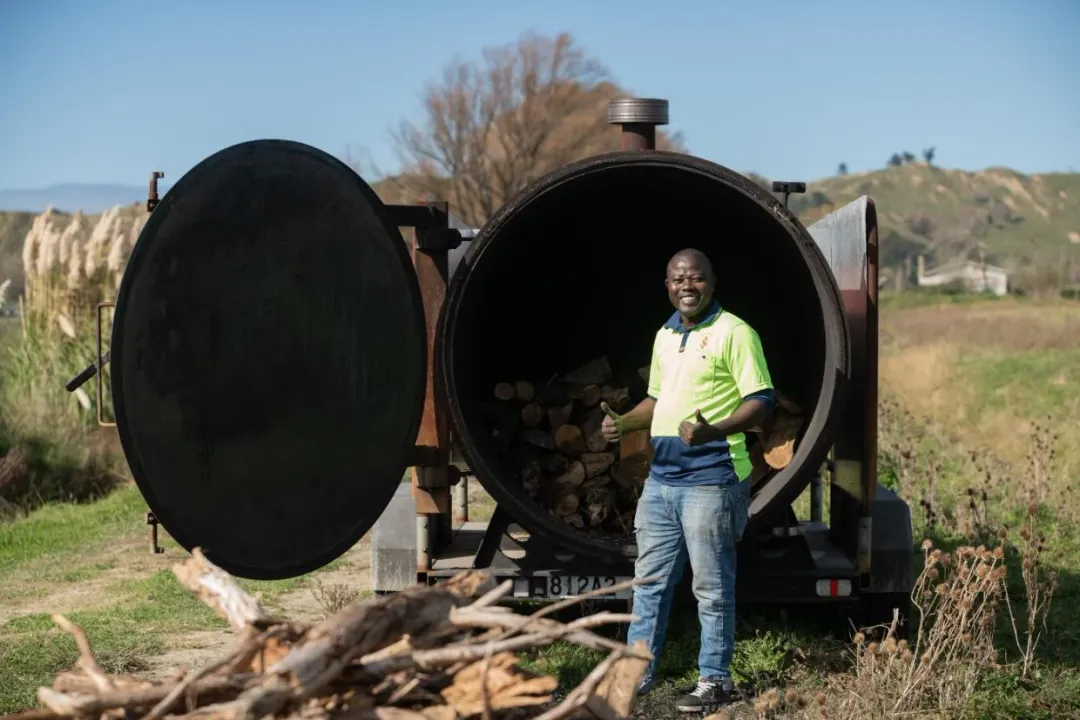
When Thabiso Mashaba first saw photographs of storm debris strewn along the Tairāwhiti coast, he thought the images showed one beach. Arriving in New Zealand through the Edmund Hillary Fellowship, he soon saw the scale of the woody waste for himself in Ūawa Tolaga Bay. Coming from landlocked Botswana, he had been eager to visit the sea; instead, he encountered what he described as an even worse sight than the television images.
Now Mashaba coordinates Slash for Cash, an iwi- and hapū-supported recovery project run by the Tolaga Bay Inn Charitable Trust, with Te Aitanga-a-Hauiti at its heart. The initiative turns suitable woody debris into biochar, a porous, carbon-rich material that can be added to soil. The project aims to give at least some of the storm- and forestry-related wood another use.
Mashaba brought relevant experience from Botswana, where he had worked on converting crop residues such as maize cobs and stalks into biochar and smokeless fuel briquettes. For the Tairāwhiti effort, mobile kilns heat the wood while limiting oxygen, producing char instead of letting the material burn away to ash. Mashaba likens the tiny pores in the finished product to a “hotel for nutrients”: they can hold water and nutrients in the soil near plant roots.
Growers have told him their soil seems to stay moist longer during dry spells after using the product. Mashaba is cautious about those reports, however, describing them as observations rather than established evidence. Before garden use, the biochar can be “charged” by mixing it with nutrient-rich material. One option in the project combines it with sheep manure; liquid compost or compost tea may also be used.
For fruit trees, Mashaba suggests spreading prepared biochar over the root zone and lightly working it into the soil surface. In a vegetable garden, it can be spread across a bed and incorporated into the upper layer. The article also reports that, after Cyclone Gabrielle, biochar was applied to 54 mandarin trees in an orchard, as the project explores practical ways to reuse the storm’s woody legacy.
Source ↗